
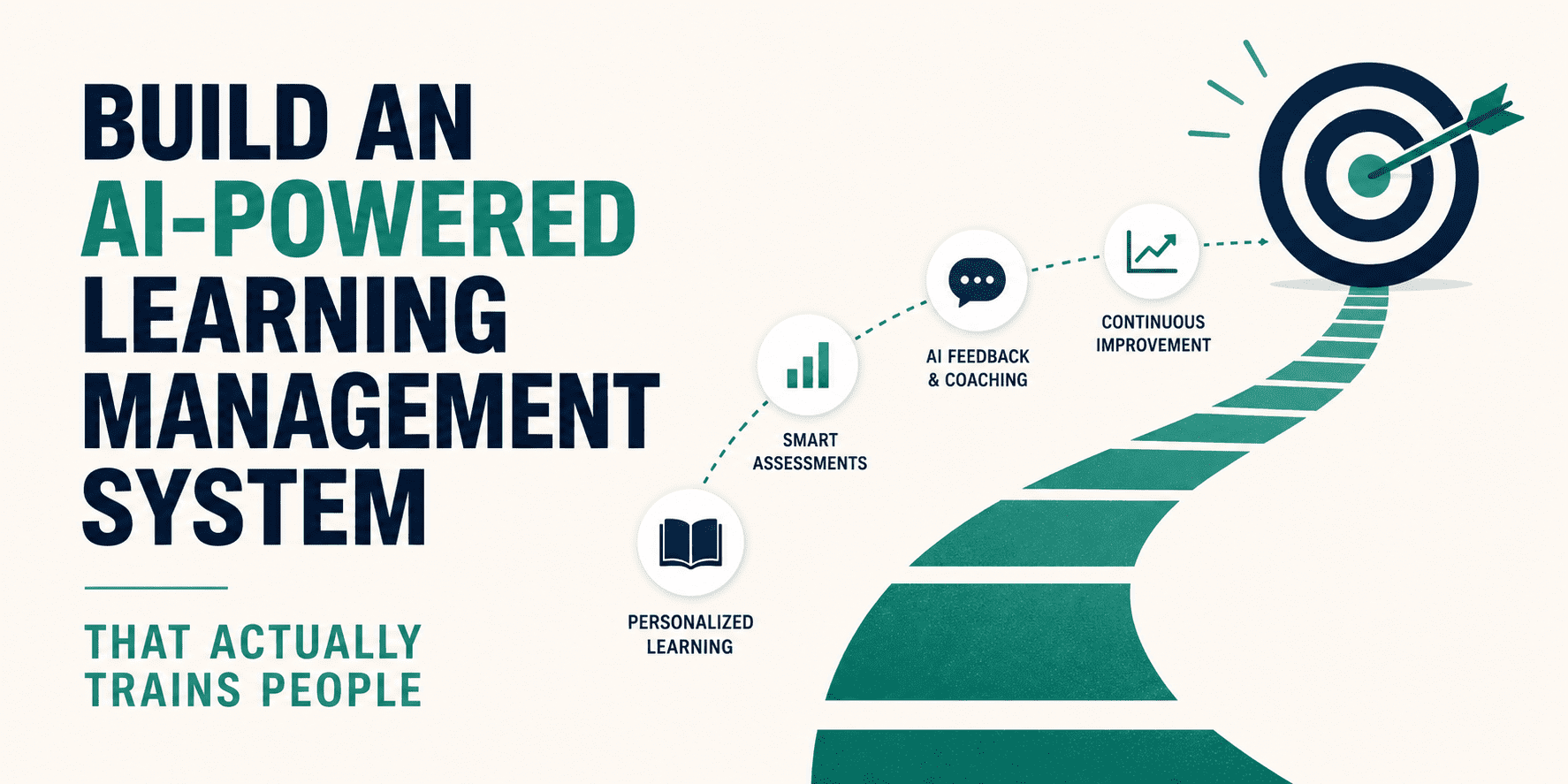
KDNuggets published a tutorial demonstrating how to build an AI-powered learning management system using free, open-source tools and locally-run language models—specifically positioning it as an alternative to the traditional LMS landscape dominated by platforms like Canvas and Blackboard. The system described includes four core features: adaptive learning paths that adjust to individual learner knowledge levels, dynamically generated quizzes rather than static question banks, a conversational tutor powered by local models, and analytics that track actual comprehension rather than completion metrics. Notably, the article frames this as achievable without expensive API subscriptions, suggesting the barrier to entry for sophisticated educational AI has collapsed. The tutorial includes a public repository invitation, framing this not as enterprise software but as something individual developers and small teams can implement and modify.
This moment reflects converging pressures on the traditional ed-tech industry. Enterprise LMS platforms have stagnated—they remain expensive, inflexible, and fundamentally designed for content delivery rather than learning outcomes. Simultaneously, the rise of capable open-source language models (Llama, Mistral) and local inference tools has made sophisticated AI functionality available without proprietary cloud dependencies. The broader ed-tech market has also faced sustained criticism: online learning completion rates remain poor, credential inflation has devalued certificates as signals of actual capability, and research consistently shows that learners retain minimal knowledge from traditional asynchronous courses. Into this gap steps a newly achievable technological solution—not theoretical, but implemented and shareable. The timing matters because the cost and complexity barriers that once protected incumbent platforms have simply evaporated.
The implications extend beyond learning outcomes, though that is significant. This development represents a fundamental challenge to the business model of the traditional LMS industry, which has relied on high switching costs and feature bundling to justify premium pricing. When adaptive learning, dynamic assessment, and conversational tutoring become open-source commodities, the moat around Canvas disappears. More broadly, this exemplifies a larger trend: AI capabilities that seemed cutting-edge eighteen months ago—personalization, text generation, conversational understanding—are now baseline expectations for any educational technology. The article's implicit claim—that you can build a genuinely intelligent system without Google or OpenAI-scale resources—reshapes what "sophisticated AI" means in practice. It's no longer about model size or training compute, but about thoughtful application and local control.
The impact surfaces across distinct constituencies. For developers, this tutorial offers a template for ed-tech startups that don't require venture funding to compete with incumbents. For enterprises currently locked into expensive LMS contracts, it signals an alternative architecture worth exploring internally or with vendors. For individual instructors and small educational organizations that have been priced out of advanced learning technology, the accessibility changes the game entirely. But most significantly: learners themselves face a potential shift in how educational systems are designed. Rather than being sorted into one-size-fits-all curricula, they could experience genuine adaptive sequences that account for their prior knowledge, learning speed, and knowledge gaps. The distribution of sophisticated educational technology becomes democratized rather than concentrated among vendors with large customer bases.
Competitively, this is a direct threat to the LMS oligopoly. Blackboard, Canvas, and Moodle built their advantages on network effects and integration depth, but neither is nimble enough to rapidly absorb AI-driven personalization in ways that match bespoke implementations. The tutorial also accelerates a broader ecosystem shift: away from cloud dependencies and toward open-source, self-hosted ed-tech stacks. This has implications for data sovereignty, cost structures, and the ability for institutions to customize rather than conform to vendor defaults. Societally, it challenges the validation model that online education has relied on—if learning is genuinely personalized and outcomes are measurable, does a certificate matter as much as demonstrated capability? The article sidesteps this question, but it's implicit in its design.
Looking forward, several questions shape how this actually plays out. Will locally-run models remain viable as course scale increases, or will latency and computational costs push adopters toward cloud inference? How do quality and consistency work when quizzes and tutoring are entirely AI-generated—what prevents harmful misconceptions from being embedded in the system? Will incumbent platforms attempt rapid AI integration, or will they lose share to purpose-built alternatives? And crucially: what happens to instructor roles when personalization, assessment, and tutoring are automated? The tutorial treats these as engineering problems, but they're increasingly institutional ones. The technology is ready; the human and organizational questions remain unresolved.
This article was originally published on KDNuggets. Read the full piece at the source.
Read full article on KDNuggets →DeepTrendLab curates AI news from 50+ sources. All original content and rights belong to KDNuggets. DeepTrendLab's analysis is independently written and does not represent the views of the original publisher.


