
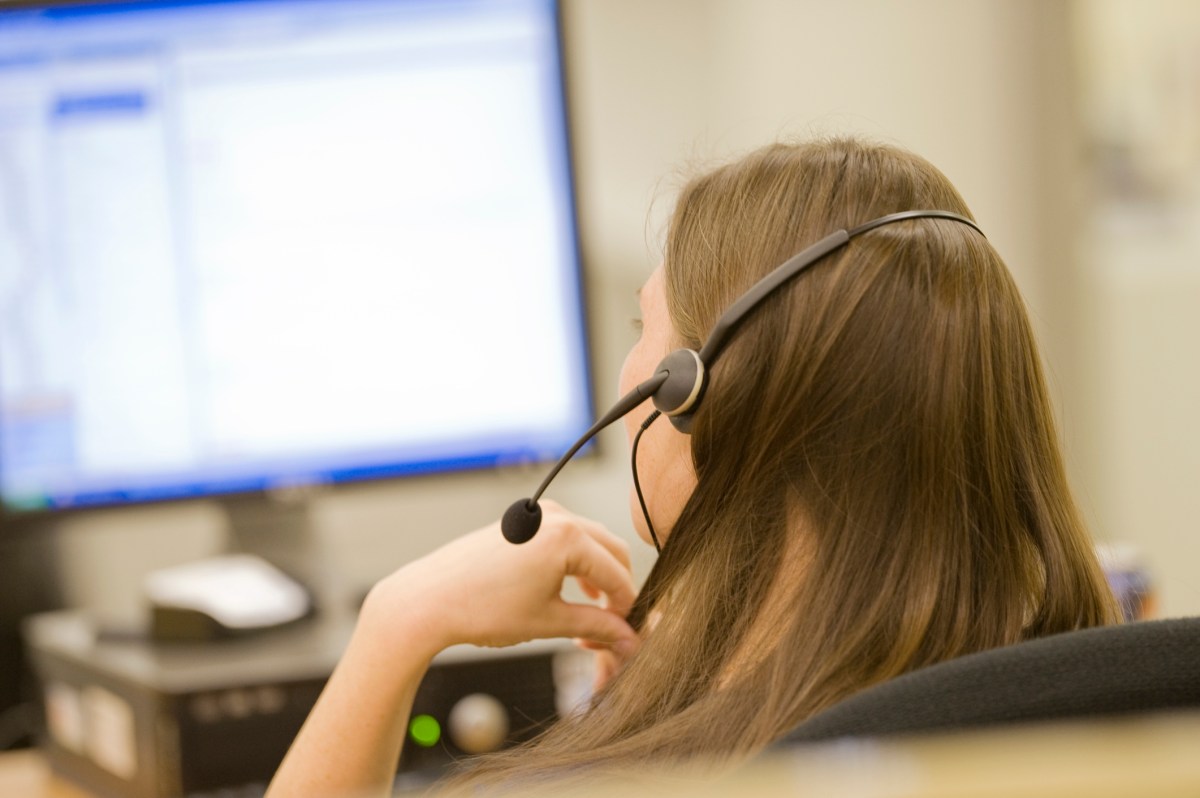
The acoustic texture of the startup office is fundamentally changing. What was once the steady rhythm of typing—punctuated by Slack notifications and the occasional heated Zoom call—is giving way to a workspace saturated with whispered voice commands and dictation. The trend isn't new in isolation; voice input has existed for years. But the recent convergence of improved voice-to-code models, seamless integration with development tools, and a generation of founders who've fully embraced dictation as their primary input method has crossed a critical threshold. When venture capitalists describe visiting startups as resembling "high-end call centers," and when executives openly acknowledge that their offices now sound "like a sales floor," we're witnessing a shift that extends far beyond mere tool preference into the realm of office culture and workplace norms.
This moment reflects the maturation of voice AI and a specific inflection point in how developers approach their work. The enabling technology has been improving steadily—voice recognition accuracy has crossed thresholds where even complex code syntax can be reliably captured. Equally important is the integration layer: tools that directly wire voice input into IDEs and version control systems remove friction that would otherwise make dictation impractical. But the deeper driver is psychological. As AI tools have proliferated and normalized, a cohort of early adopters has become comfortable treating voice as a first-class input method rather than a fallback for accessibility or convenience. The vocal advocates pushing hardest for dictation-first workflows—Gusto's Edward Kim and others—are signaling to their teams and peers that this represents the future of knowledge work, lending it legitimacy and social momentum within competitive startup communities eager to adopt whatever their peers claim will boost productivity.
The implications ripple across multiple dimensions of work life. On the productivity front, the claims are straightforward: voice input can be faster than typing for certain cognitive tasks, and the enforced verbalization may clarify thinking in ways silent typing does not. But this masks genuine friction. The constant low hum of whispered dictation doesn't just change the soundscape; it transforms the nature of shared cognitive space. Open offices already struggle with focus and concentration. Overlaying them with ambient voice input creates a new category of distraction while simultaneously making it harder for workers to think silently or have private internal monologues. There's also an underexplored cognitive angle: typing and thinking have been intertwined in programmer culture for decades. The shift to voice may genuinely alter how code gets written, how problems get solved, and what kinds of solutions emerge when the input method changes. Whether that's net positive remains an open empirical question.
The human cost of this transition extends to cohorts often overlooked in tech's grand experiments with workplace norms. Neurodiverse workers—those with ADHD, autism, or auditory processing challenges—may find the constant ambient dictation overwhelming or disorienting. Those who think more effectively in silence, or whose work style involves extended periods of deep internal processing, face an invisible pressure to conform to an environment designed for those energized by verbal externalization. The awkwardness that Kim himself acknowledged—the feeling that constant dictation is "just a little awkward"—points to real social discomfort that hasn't been resolved, only managed through workarounds like spatially isolating workers who choose to dictate heavily. When offices start subdividing to accommodate voice input, we're not optimizing for productivity; we're creating friction that masks a coordination failure about norms and expectations.
This shift also crystallizes a broader pattern in how AI adoption unfolds within competitive tech hierarchies. Founders and executives embrace a new tool, declare it transformative, and frame adoption as a marker of sophistication or future-readiness. Their teams follow, partly from genuine belief, partly from fear of being left behind, partly from the simple mimetic pressure of working in an environment where the norm has shifted. It's the same dynamic we saw with open office plans, standup meetings, and async-first work cultures—each framed as an innovation that would unlock productivity or collaboration, each creating winners and losers depending on work style, neurology, and personality. The dictation wave suggests tech remains locked in a cycle where centralized adoption of a single mode—driven by early adopters with outsized influence—crowds out other approaches rather than creating genuine optionality for how different people work best.
The questions that linger reveal where this trend goes next. Will offices settle into new norms around when dictation is acceptable, where, and for whom—essentially encoding rules that don't currently exist? Will remote and hybrid work offer a refuge for those uncomfortable with voice-saturated spaces, further stratifying who can work how and where? Will voice input remain primarily a tool for code and structured output, or will it extend to writing, design, and less linear cognitive work? And perhaps most pressing: Will the tech industry, once again, impose a singular model of "future work" that works brilliantly for some and actively harms others, then wonder why retention and satisfaction suffer? The whisper-filled office may be more efficient for those built for it. For everyone else, it's simply a new form of conformity dressed up as progress.
This article was originally published on TechCrunch AI. Read the full piece at the source.
Read full article on TechCrunch AI →DeepTrendLab curates AI news from 50+ sources. All original content and rights belong to TechCrunch AI. DeepTrendLab's analysis is independently written and does not represent the views of the original publisher.


