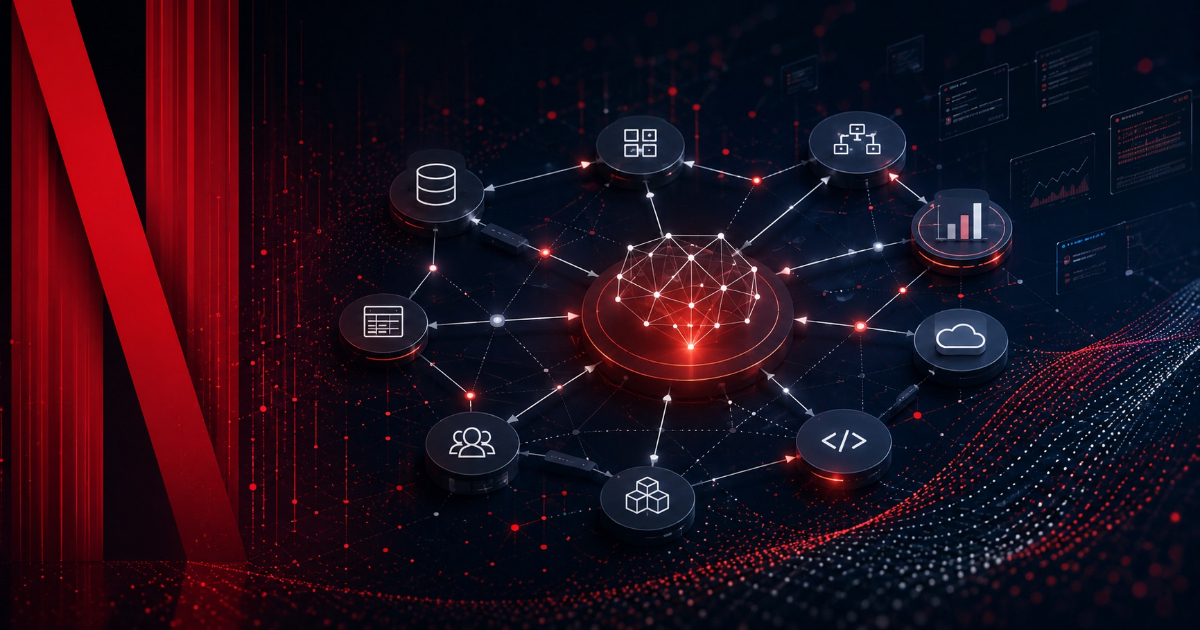
Netflix has detailed an internal architecture that fundamentally reframes how enterprises manage machine learning infrastructure at scale. Rather than treating datasets, models, features, and workflows as isolated pipeline stages, the company has built a graph-based system that treats these assets as nodes within an interconnected network of dependencies and relationships. The "Model Lifecycle Graph" maps how a single model might depend on multiple upstream datasets and derived features, and simultaneously feed into downstream production services—capturing the full arc of an asset's journey from conception to operational deployment. By representing these relationships as traversable graph connections, Netflix engineers can now perform impact analysis, trace lineage chains, and identify patterns of reuse across the organization. This approach directly addresses one of the most vexing operational problems in large-scale machine learning: understanding where a model originated, what it depends on, and how changes propagate through interconnected systems.
The emergence of this architecture reflects a maturation crisis in enterprise machine learning. As organizations accumulate dozens or hundreds of datasets, features, and models across multiple teams, the operational debt compounds rapidly. Traditional pipeline tooling was designed for simpler workflows where dependencies were relatively linear and contained. But modern ML systems are anything but linear—a data scientist building a recommendation model might inadvertently depend on features that another team owns and is actively modifying, creating invisible brittleness. Netflix's engineers recognize that at a certain organizational scale, this opacity becomes a governance and safety nightmare. The timing also reflects a broader industry recognition that metadata and lineage tracking are not nice-to-have features but essential infrastructure. Companies like LinkedIn have already explored similar territory with DataHub, and the pattern is clear: as ML systems proliferate, organizations need better ways to understand what exists, how it's constructed, and who owns what.
The significance of graph-based ML infrastructure extends beyond convenience into fundamental operational improvements. Graph structures naturally capture the reality that machine learning systems are fundamentally about relationships and dependencies rather than sequential transformations. This representation enables impact analysis that would otherwise require manual, error-prone investigation—when a dataset schema changes or a feature is deprecated, the graph can immediately surface all downstream consumers. It also creates the foundation for genuine knowledge reuse; instead of teams rediscovering that a particular feature combination works well, or rebuilding models that solve problems already solved elsewhere, the graph makes this institutional knowledge visible and navigable. Perhaps most importantly, this architecture begins to solve the reproducibility and accountability problem that haunts many organizations. When auditors or data governance teams need to understand how a production model was constructed and which upstream assumptions it relies on, the graph provides a queryable answer rather than an archaeological expedition through notebooks and Slack threads.
The constituencies affected by this shift span the entire ML organization. Data scientists benefit from discoverability—they can locate existing features, datasets, and models before building new ones. ML engineers and platform teams gain operational visibility into system health and dependency chains. Product teams and leadership gain the ability to understand and communicate which business decisions rest on which ML assets. For larger enterprises attempting to scale machine learning beyond a handful of specialist teams, this architecture directly reduces the "hub-and-spoke" dynamics where all ML knowledge concentrates in a few platform experts. By democratizing access to metadata and lineage information, Netflix is essentially making it possible for practitioners to be more self-sufficient, to understand ownership and dependencies without requiring a domain expert to translate. This has cascading effects on organizational velocity and reduces the infamous knowledge silos that plague many mature ML organizations.
Netflix's move signals that graph-based metadata platforms are shifting from experimental nice-to-haves toward operational necessities, accelerating an industry-wide transition. The competitive implications are substantial: companies that lack this kind of visibility into their ML systems will find themselves at a disadvantage as systems become more interconnected and complex. This also represents a shift in how enterprises think about ML infrastructure—less as a collection of tools and more as a knowledge management and governance problem. The emphasis on internal "democratization" through visibility and discoverability reframes the role of platform teams from gatekeepers to librarians. Enterprises at significant scale are quietly investing in similar capabilities, though few have articulated it as clearly as Netflix has, suggesting this may become a table-stakes requirement for any organization running substantial machine learning workloads.
The open questions now center on standardization and ecosystem effects. Will Netflix open-source this architecture, and if so, will it become an industry standard or remain one company's solution? How do organizations with legacy ML infrastructure retrofit this kind of graph-based governance retroactively? And critically, as these systems accumulate metadata at scale, how do organizations prevent the graph itself from becoming a liability—cluttered, outdated, or gamed by teams trying to obscure dependencies rather than document them? The long-term implication is that machine learning governance will increasingly look like knowledge graph management, requiring new skills and disciplines around metadata quality and versioning.
This article was originally published on InfoQ AI. Read the full piece at the source.
Read full article on InfoQ AI →DeepTrendLab curates AI news from 50+ sources. All original content and rights belong to InfoQ AI. DeepTrendLab's analysis is independently written and does not represent the views of the original publisher.