Machine Learning Mastery
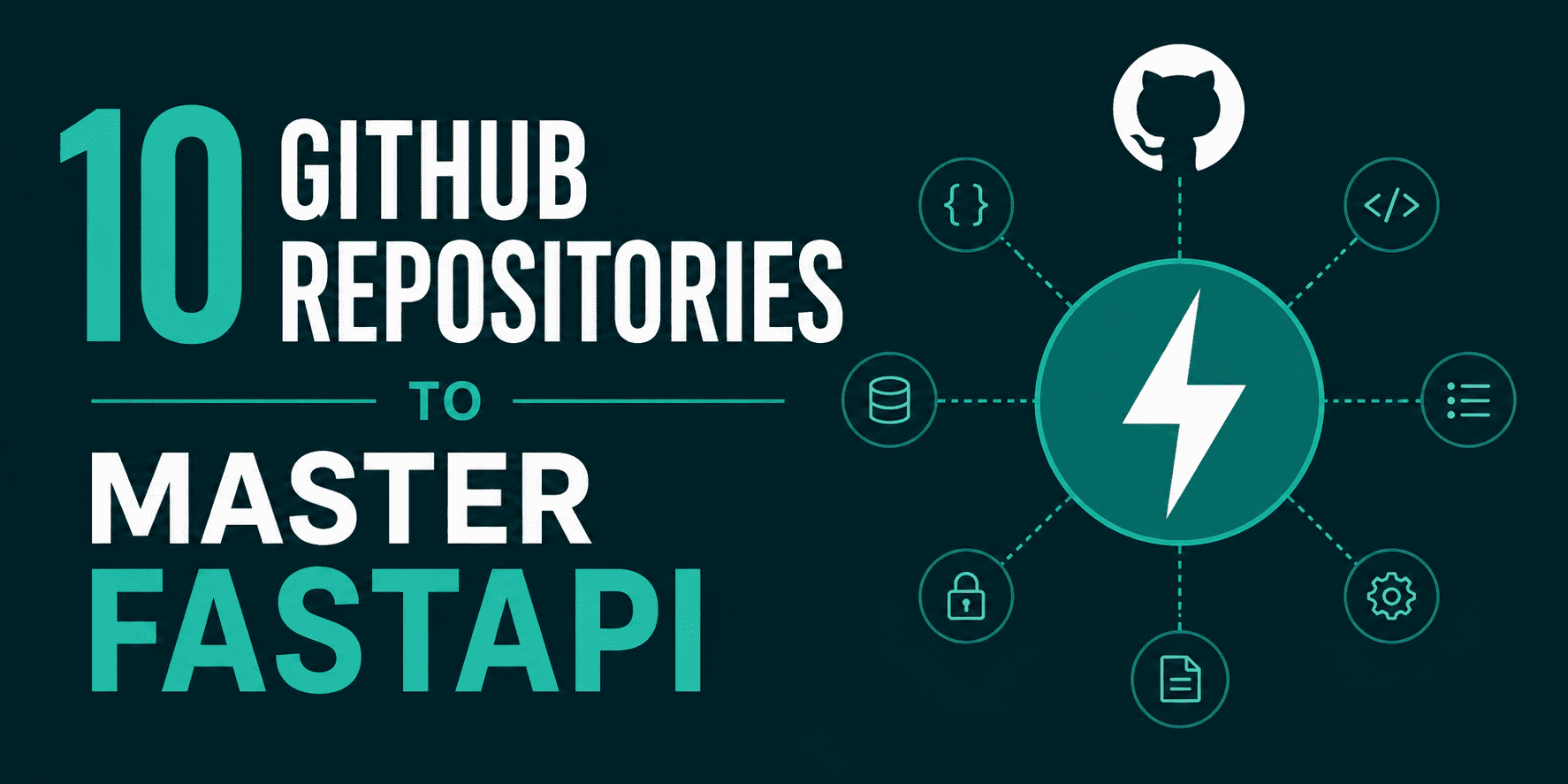
A KDNuggets article highlighting ten GitHub repositories as FastAPI learning resources has crystallized a telling shift in how developers acquire modern technical skills. Rather than framing expertise acquisition through official documentation or structured curricula, the curation celebrates learning through examination of real-world codebases—ecosystem compilations like mjhea0/awesome-fastapi, full production templates like fastapi/full-stack-fastapi-template, pattern guides, and progressively complex examples. The implicit argument is that developers no longer learn frameworks in isolation from their actual application; they learn by reverse-engineering how practitioners solve problems in production contexts. This isn't new, but its promotion by a major technical publication signals maturation of a learning pattern that has become essential to competitive technical development in the open source era.
FastAPI's meteoric rise since its 2018 launch reflects a convergence of timing and genuine technical merit, but its sustained growth depends on something less frequently examined: the density and quality of its surrounding knowledge infrastructure. Python's API framework landscape had long been dominated by Flask (minimalist) and Django (batteries-included), with FastAPI carving a middle path that prioritized performance, type hints, and developer experience in ways that felt contemporary. However, frameworks don't win adoption purely on technical superiority. They win when developers can learn them efficiently and see themselves reflected in successful projects they admire. The proliferation of curated learning repositories suggests FastAPI has crossed a threshold where the community is sufficiently large and diverse to generate multiple competing approaches to knowledge transfer, each targeting different learning styles and use cases.
This moment matters because it exposes how modern developer productivity is increasingly decoupled from formal education or vendor-supplied instruction. The ascendance of GitHub repositories as primary learning artifacts reveals that developers trust peer implementations more than polished documentation—a dynamic that redistributes credibility from official gatekeepers to the collective judgment of the open source community. For FastAPI specifically, this dependency on community-driven learning resources creates both an opportunity and a fragility. The framework's success is now partially hostage to whether those repositories remain maintained, discoverable, and aligned with evolving best practices. A learning ecosystem is only effective if resources don't rot or accumulate anti-patterns disguised as examples.
The developers most directly affected span multiple constituencies. Intermediate Python developers using FastAPI face a new problem of abundance—which of these repositories actually represents production wisdom versus which is idiosyncratic or outdated? Enterprises adopting FastAPI for internal tooling or API layers need confidence that they're building on patterns that scale and remain stable. Content creators and technical educators see both competition and validation; the existence of a dozen respected FastAPI repositories suggests there's genuine demand for diverse learning pathways and educational formats. Perhaps most significantly, the FastAPI maintainers themselves now must consider ecosystem health as part of their core responsibility—a shift from simply maintaining the framework to shepherding the knowledge infrastructure around it.
Compared to frameworks locked behind proprietary ecosystems or those with sparse community engagement, FastAPI's learning advantage is now measurable and competitive. A developer can study a full-stack template that integrates React, PostgreSQL, Docker, and deployment strategies in one coherent example, then pivot to studying authentication patterns in isolation, then explore architectural tips for scaling. This multi-pathway access would be difficult for developers adopting less-popular frameworks or those with gatekeeping documentation. The articles and repositories also solve a real problem that documentation struggles with: showing developers not just what to do, but how different developers actually structure and solve problems. This is especially valuable for FastAPI's positioning as a framework for both simple backends and complex microservices or machine learning systems.
The critical questions emerging are whether this decentralization of learning remains sustainable and whether it sets a pattern other frameworks must now match. If FastAPI's adoption trajectory continues to depend on community-curated repositories, what happens when maintainers deprioritize updates or when best practices shift but repositories don't reflect those changes? There's also the question of consolidation: will these ten repositories remain discrete or will natural selection favor certain resources, concentrating authority back into fewer hands? Finally, this shift suggests that framework documentation itself may need to evolve toward acknowledging and curating the learning repositories around it, explicitly blessing certain approaches rather than assuming developers will stumble upon quality resources organically. The framework that best integrates its ecosystem wins—and right now, FastAPI is winning that game.
This article was originally published on KDNuggets. Read the full piece at the source.
Read full article on KDNuggets →DeepTrendLab curates AI news from 50+ sources. All original content and rights belong to KDNuggets. DeepTrendLab's analysis is independently written and does not represent the views of the original publisher.