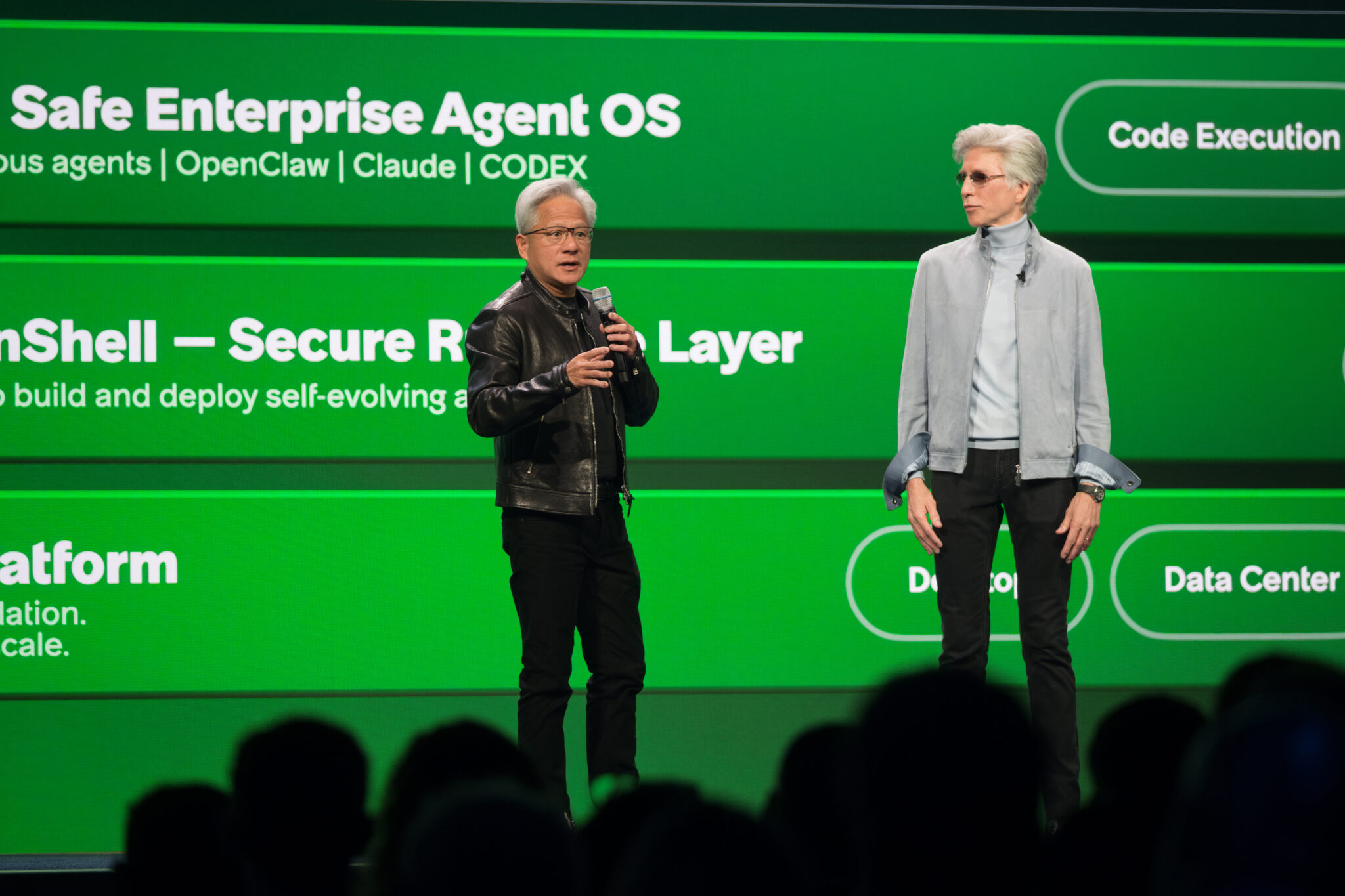
NVIDIA and SAP have announced a technical partnership aimed at embedding governance and trust controls into enterprise software agents from the ground up. The collaboration integrates three core components: NVIDIA's OpenShell—an open-source runtime for agent execution—SAP's Joule Studio as an enterprise control layer, and NVIDIA's NemoClaw reference architecture for building autonomous systems. The intent is to create a production-ready path for enterprises to deploy agents that respect role-based permissions, enforce policy compliance, maintain audit trails, and execute only within defined operational boundaries. By bundling NemoClaw directly into Joule Studio, the partners aim to eliminate the need for development teams to engineer security scaffolding from scratch.
This partnership emerges at an inflection point in AI's evolution from experimental chatbots to mission-critical decision automation. Enterprise leaders have begun piloting agents for finance, supply chain, and procurement workflows—precisely the domains where SAP holds sway as the underlying system of record for thousands of Global 2000 companies. Until now, most open-source and commercial agent frameworks have treated security and governance as bolt-on concerns, addressed after the core agent logic is built. NVIDIA's five-layer AI framework—positioning applications as the apex where economic value is realized—highlights why this gap matters: no matter how capable the model or efficient the infrastructure, agents cannot realize value if enterprises cannot trust them with sensitive operational data. SAP's position at the nexus of corporate finance and operations makes it uniquely positioned to force this conversation into the mainstream.
The deeper significance lies in what this partnership acknowledges: a fundamental asymmetry between agent capability and enterprise control. Existing agent frameworks focus on instruction-following and tool access; they rarely provide the fine-grained visibility and veto mechanisms that enterprises require to deploy agents into high-stakes domains. OpenShell's contribution—asking "can this safely execute?"—addresses runtime safety; Joule Studio's contribution—asking "should this happen at all?"—addresses governance policy. Neither alone suffices. This two-layer approach reflects a mature understanding that true trustworthiness in agentic systems demands both technical isolation and organizational oversight. The implication is that enterprise AI adoption has hit a ceiling that cannot be crossed by faster models or smarter prompts alone.
The immediate beneficiaries are SAP customers building custom agents, who now inherit a production-grade security foundation rather than inventing one. Development teams gain velocity by starting from a structured blueprint instead of raw capabilities. Broader still, enterprise technology leaders—CIOs and CTOs evaluating agentic platforms—gain evidence that governance is no longer an afterthought. The structural stability of this partnership, rooted in NVIDIA's role as both a SAP customer and a vendor, creates incentives for both companies to make the integration not just theoretically sound but operationally robust. Over time, this raises the baseline expectation for any agentic platform targeting enterprise use cases.
The competitive landscape for enterprise AI is fragmenting into two visions: permissionless velocity and governed control. OpenAI and Anthropic have emphasized model capability; platforms like Hugging Face prioritize openness. SAP and NVIDIA are staking a claim in the middle ground—acknowledging that enterprise customers will not adopt agents unless they can answer auditors, regulators, and risk committees. This positioning tilts toward the thesis that enterprise adoption requires not just better agents but visible, auditable, and enforceable boundaries. It also signals that the winners in enterprise AI may not be those with the smartest models, but those who can embed governance into the fabric of agent systems without making them too cumbersome to use.
The critical questions ahead revolve around execution and real-world friction. Will policy modeling in Joule Studio actually keep pace with the creative ways agents will try to work around constraints? Can enterprise teams realistically manage the governance overhead without slowing deployment cycles so much that agents lose practical value? Does open-sourcing OpenShell build the ecosystem needed for adoption, or fragment it into incompatible implementations? And perhaps most important: will the market actually reward trust over raw capability, or will enterprises stay tempted by faster, less-governed alternatives until an incident forces their hand? The next 18 months of SAP customer deployments will determine whether this partnership is a genuine turning point for trustworthy AI or a sophisticated answer to a question the market doesn't yet care about.
This article was originally published on NVIDIA AI Blog. Read the full piece at the source.
Read full article on NVIDIA AI Blog →DeepTrendLab curates AI news from 50+ sources. All original content and rights belong to NVIDIA AI Blog. DeepTrendLab's analysis is independently written and does not represent the views of the original publisher.