The Verge — AI

Cowboy Space, founded by Robinhood co-founder Baiju Bhatt, has secured $275 million in Series B funding at a $2 billion post-money valuation to pursue an audacious thesis: if you can't buy rocket capacity, build your own. The company, which rebranded from Aetherflux after initially pivoting from space-based solar collection to orbital data centers, now plans to develop a proprietary launch system targeting its first flight before the end of 2028. This shift from satellite operator to rocket manufacturer represents not merely a capital raise announcement but a fundamental recalibration of what it takes to scale compute infrastructure at the margins of Earth's orbit. The backing from Index Ventures, Breakthrough Energy Ventures, and others signals serious institutional belief that this path, however unconventional, addresses a genuine constraint in the AI infrastructure stack.
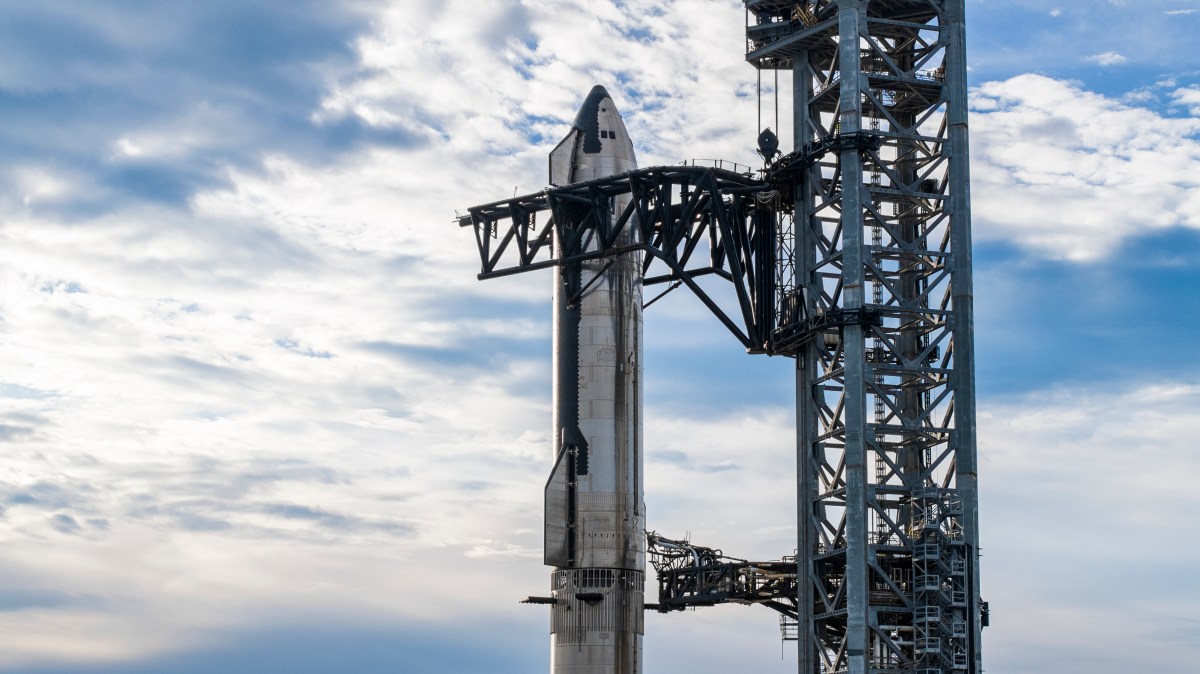
The decision emerges from a specific bottleneck: even as AI demand for computational capacity explodes, the launch industry cannot supply sufficient access at economically viable unit costs. Bhatt's team exhausted conventional options—negotiating with multiple established launch providers—and found that available capacity three to four years out remains severely constrained. SpaceX's Starship remains in test phases with its full commercial deployment timeline uncertain, while Blue Origin's New Glenn experienced its third launch failure in April. This launch capacity deficit isn't temporary scarcity but structural reality. Startups like Firefly Aerospace, Stoke Space, and Relativity Space have spent years developing next-generation systems with no consistent commercial operations to show. For Cowboy Space, waiting for an external provider to solve this problem meant postponing orbital data center economics indefinitely, leaving the opportunity to competitors or pushing deployment timelines into the 2030s.
The implications ripple through how the AI infrastructure industry solves its computational bottlenecks. For years, the silicon and server markets absorbed explosive demand through traditional data center expansion—more efficient chips, denser racks, better cooling. But ground-based infrastructure faces physical and financial limits: real estate, power grids, cooling, and latency constraints become increasingly binding as model training grows more power-intensive and distributed. Orbital data centers theoretically offer unlimited power density through solar collection, reduced cooling overhead, and novel latency characteristics for certain workloads. Yet none of this matters if launching capacity to orbit remains a bottleneck more severe than terrestrial constraints. By building its own launch vehicle, Cowboy Space is essentially arguing that the math works only when you control both the supply and demand sides of the equation—you must be your own customer and your own logistics provider.
This shift directly affects the competitive landscape for AI infrastructure. Hyperscalers like Google, Microsoft, and Amazon have invested heavily in data center efficiency and custom silicon, but they're also all exploring orbital options as marginal capacity additions. For smaller players—specialized inference providers, edge computing networks, and emerging AI infrastructure companies—orbital compute offers a potential leapfrog opportunity if launch costs plummet. Cowboy Space's entry into rocket development effectively raises the bar for entire categories of competitors. Those without the capital, technical expertise, or founder credibility to pursue dual competencies in satellites and launch vehicles will need either to partner with Cowboy Space, secure government contracts to subsidize access, or abandon orbital strategies entirely. The company's $275 million raise doesn't just fund rocket development; it consolidates leverage over a supply chain that previously scattered across dozens of would-be operators.
What remains uncertain is whether Bhatt's timeline and unit economics survive contact with aerospace engineering reality. A 2028 first launch is ambitious for a newly dedicated rocket program without prior flight heritage. Blue Origin and Rocket Lab took years to mature their vehicles; relativity more optimistic schedules have consistently slipped. Moreover, launching rockets at the frequency required to support orbital data center operations—multiple times per month at scale—demands not just a working vehicle but an operational cadence that only SpaceX has demonstrated. Cowboy Space will face regulatory approval timelines, manufacturing scale-up challenges, and the perpetual risk that component suppliers or subcontractors introduce delays. If the company cannot reach operational launch rates before 2030, the capital advantage disappears and orbital data center viability reverts to hoping for third-party improvements in launch access. The next critical milestone won't be the Series B announcement but evidence of actual launch readiness—test articles, regulatory clearances, customer commitments.
This article was originally published on TechCrunch AI. Read the full piece at the source.
Read full article on TechCrunch AI →DeepTrendLab curates AI news from 50+ sources. All original content and rights belong to TechCrunch AI. DeepTrendLab's analysis is independently written and does not represent the views of the original publisher.