The Verge — AI

The artificial intelligence industry is colliding with physical reality in ways that can no longer be ignored. This week saw converging signals that data center expansion—the necessary but inconvenient infrastructure backbone of every AI breakthrough—has become a genuine political flashpoint. A Utah county approved a 40,000-acre hyperscale facility that will consume 9 gigawatts of power, more than doubling the entire state's current electricity draw. Simultaneously, the NAACP filed suit against Elon Musk's xAI over the Colossus 2 data center near Memphis, alleging illegal operation of polluting turbines in violation of the Clean Air Act. The Energy Information Administration is launching mandatory energy consumption surveys after pilot studies revealed data centers' true appetite for power. And Iran's Revolutionary Guard published an explicit threat against OpenAI's planned Abu Dhabi facility, weaponizing AI infrastructure as geopolitical leverage. These are not isolated incidents—they represent the opening of a second front in AI's expansion.
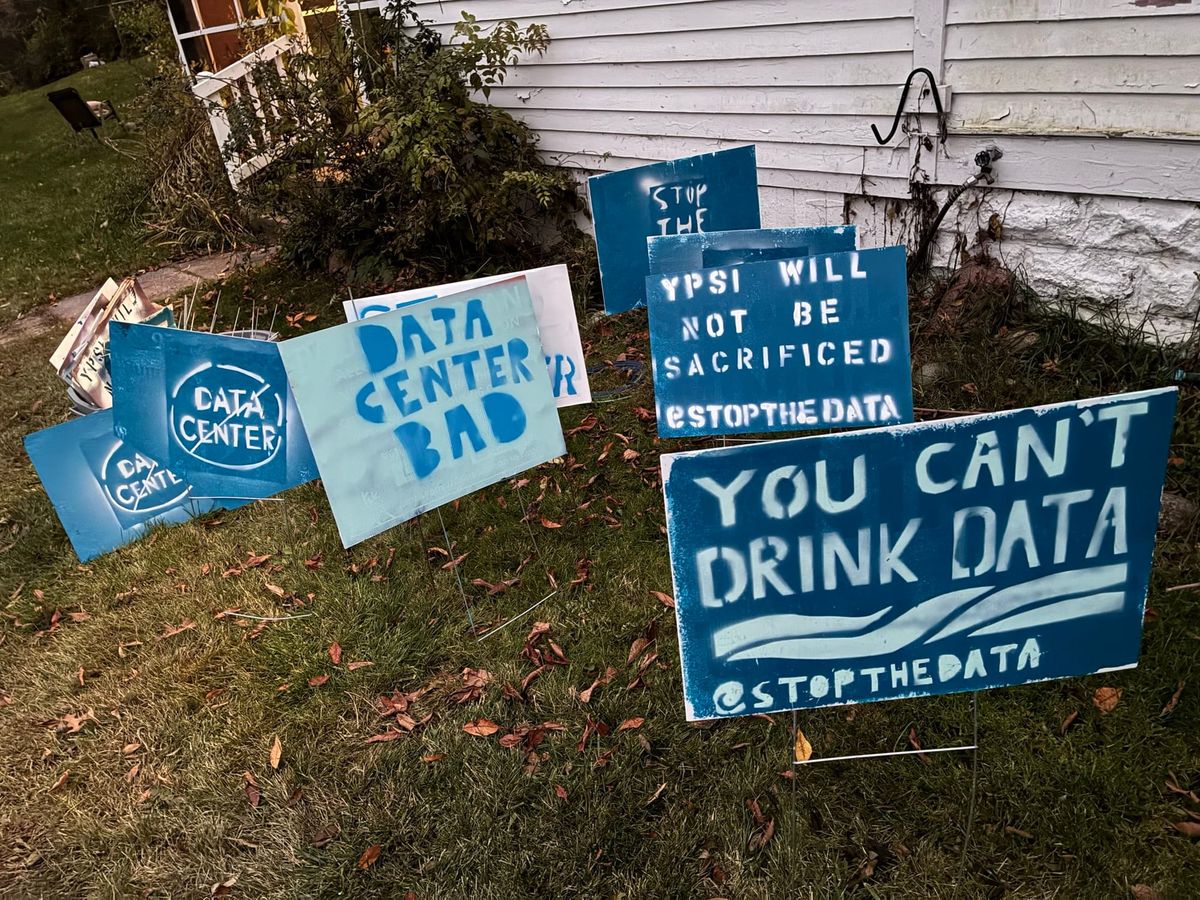
For years, the AI industry benefited from invisibility. Data centers were infrastructure: necessary, boring, the domain of specialists. Communities learned about proposed facilities through permit filings, often with minimal warning or time for opposition. The relentless demand for compute to train and run larger models created an implicit assumption that capital and electricity were unlimited resources to be claimed as needed. But the scale has become undeniable. A Pew Research survey found that 43 percent of Americans now identify data centers as a major driver of rising electricity costs—a bipartisan consensus that has crystallized almost overnight. The issue has moved from technical forums to dinner tables and town halls. Communities are organizing, tracking proposals across 18 states via crowdsourced databases, and mobilizing opposition. Regulators, sensing political pressure, are finally asking basic questions: How much power do these facilities actually consume? Who decides where they're built? What are the environmental costs?
This moment represents a constraint materializing in real time. The entire AI scaling narrative rests on the assumption of abundant, cheap electricity and available land. Both assumptions are now contested. The Utah decision signals that approvals will become harder to secure and more politically costly, even when technically feasible. The NAACP's legal challenge establishes environmental justice as a legitimate lens for opposing data centers, particularly in communities with existing pollution burdens. The regulatory surveys will likely reveal consumption figures that shock policymakers and the public alike, catalyzing further pushback. For the first time, infrastructure—not talent, not algorithms, not capital—emerges as a potential limiting factor in AI's growth trajectory. This is not a permanent brake, but it is friction where the industry expected frictionless expansion. The companies that navigate this landscape most skillfully will gain competitive advantage not through better models but through better land and power strategies.
The impact distributes unevenly across stakeholders. Developers and enterprises building AI applications depend on continued access to cheap, abundant compute. Any disruption to infrastructure buildout translates directly to higher costs and longer wait times. Communities near proposed data centers face real tradeoffs: economic development versus environmental degradation, property values, and health risks. Energy markets and utilities must accommodate sudden demand spikes that strain existing grids. Regulators face genuine uncertainty about how to balance innovation against environmental protection and community welfare. Investors in data center operators and energy companies must recalibrate projections based on slower deployment timelines. And end users—the billions of people using AI applications—may encounter higher prices and slower iteration cycles if infrastructure constraints bind.
The competitive implications are already visible. OpenAI's Abu Dhabi facility faces geopolitical vulnerability that its competitors in less fraught regions do not. xAI's legal troubles create delays and reputational damage that competitors can exploit. Companies with diverse geographies—those with data center pipelines in friendly jurisdictions like Texas, Virginia, and internationally—gain relative advantage. The ability to navigate environmental permitting and community relations becomes a core competency. This favors established infrastructure players with regulatory experience and deep-pocketed companies that can afford prolonged fights or buyouts to secure sites. Smaller players or those dependent on startup-friendly cloud providers face relative disadvantage as infrastructure becomes scarcer and more expensive. The geopolitical dimension adds new variables: companies will have to weigh the benefits of Abu Dhabi, Singapore, or other international hubs against political risks and potential sanctions.
Watch for several developments that will shape this industry over the next 12 months. The Energy Information Administration's surveys will likely reveal consumption figures that trigger fresh waves of concern and regulation. Lawsuits following the NAACP model will establish legal precedents that make future approvals harder. Some regions may move toward explicit restrictions or moratoriums on data center expansion, fragmenting what has been a relatively unified infrastructure market. Conversely, some regions may lean into hosting as an economic strategy, creating AI-friendly jurisdictions and attracting both infrastructure and talent. The crowdsourced tracker will mature into a political tool that enables organized opposition and shapes public perception. Most critically: will the industry's stated commitment to renewable energy and efficiency actually materialize, or will it prove merely aspirational? The companies that can demonstrate genuine progress on these fronts will separate from those caught in protracted political battles. For now, the era of data center expansion as a foregone conclusion has ended. What comes next depends entirely on whether AI's infrastructure demands can be reconciled with the communities forced to host them.
This article was originally published on The Verge — AI. Read the full piece at the source.
Read full article on The Verge — AI →DeepTrendLab curates AI news from 50+ sources. All original content and rights belong to The Verge — AI. DeepTrendLab's analysis is independently written and does not represent the views of the original publisher.