TechCrunch AI
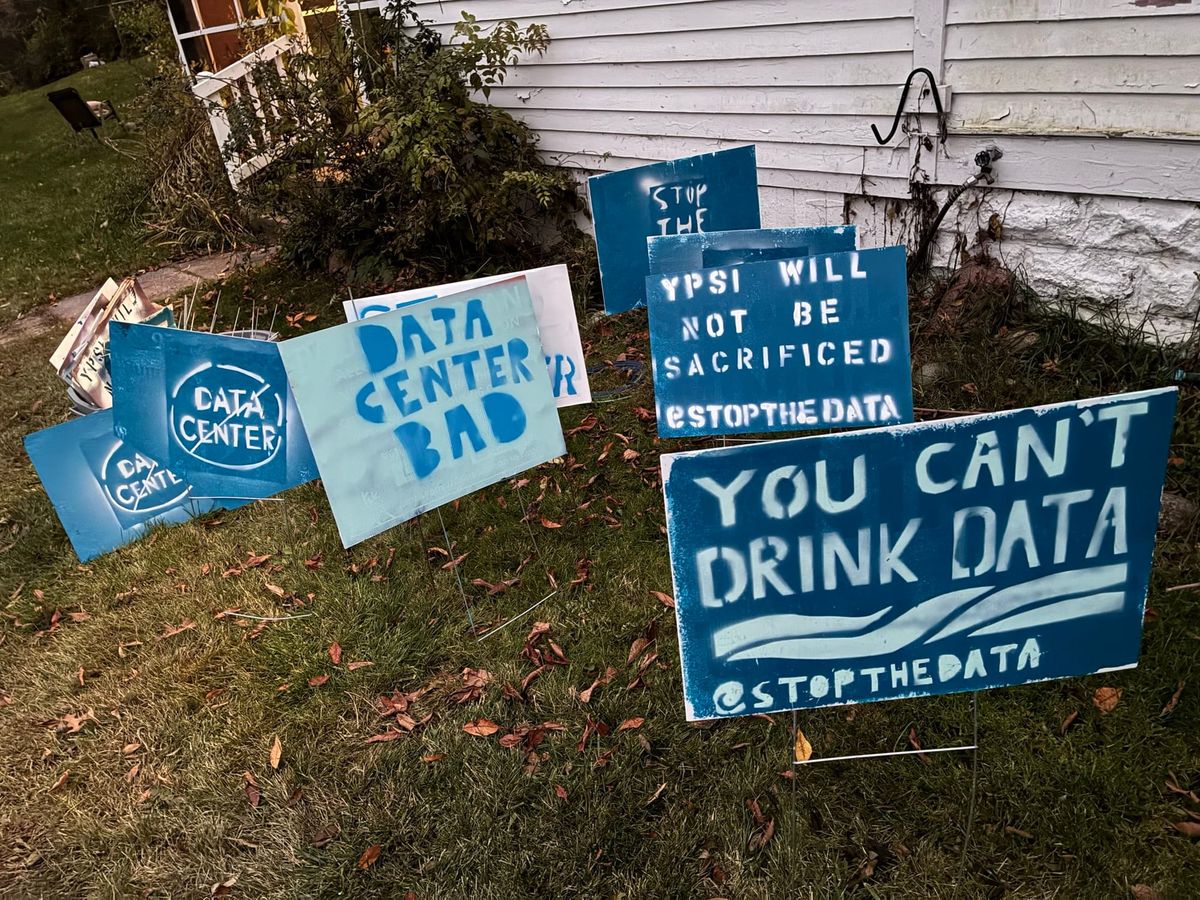
The University of Michigan and Los Alamos National Laboratory have escalated their $1.2 billion data center ambitions in Ypsilanti Township into a legal confrontation with local water authorities. In April, the Ypsilanti Community Utility Authority voted to impose a one-year moratorium on water service to hyperscale data centers while conducting environmental sustainability assessments. The University responded within 24 hours with a legal threat, arguing the moratorium constitutes unlawful discrimination and vowing to pursue "all rights and claims for relief" if the restriction remains. The core dispute centers on a narrow question: whether 200,000 gallons per day for the facility—roughly 2% of the utility's 8-10 million gallon daily capacity—poses a genuine constraint, or whether the moratorium masks something else entirely.
The infrastructure underpinning the AI boom has always been invisible to most users, but geographic reality is catching up fast. Data centers consume enormous quantities of water for cooling, a fact that became genuinely visible during the 2023 drought cycles in the Southwest and the subsequent tightening of resources in major computing hubs. Ypsilanti's moratorium reflects a broader pattern: communities are beginning to demand accountability for the environmental costs of hosting the infrastructure that powers modern AI services. The choice of location itself carries weight—Los Alamos' involvement signals this is no ordinary cloud facility, but rather infrastructure explicitly designed to support nuclear weapons research and classified government work. This dual-use framing (commercial AI capability with national security implications) gives the project outsized strategic importance and, simultaneously, outsized local political risk.
What makes this dispute genuinely significant is that it exposes a critical vulnerability in the AI infrastructure race: the assumption that technical capacity guarantees access. The University's legal argument is probably correct—the utility objectively has the water available, and a blanket sector-specific moratorium may indeed be legally vulnerable. But focusing on the legality of the moratorium misses the real shift: communities are no longer accepting the premise that data center expansion is an unqualified good. YCUA's insistence on conducting long-term environmental and sustainability studies reflects a calculus that mere headroom in current supply is insufficient justification. The University's willingness to litigate rather than collaborate signals how critical they believe this location is, and how little tolerance the AI infrastructure establishment has for local friction. If they lose, expect a wave of similar moratoriums across the country.
The fallout here extends well beyond Ypsilanti. Researchers who depend on high-performance computing infrastructure are watching to see whether major institutions can reliably secure the resources needed for next-generation training runs and inference workloads. Enterprises building AI products need confidence that compute capacity will be available; a 365-day delay ripples through roadmaps and competitive timelines. Local communities—already skeptical of extractive resource relationships with tech companies—are seeing a template for collective action. The nuclear weapons connection adds a dimension of public anxiety that generic "AI training" might not trigger, making Ypsilanti a particularly heated proxy battle over whether communities have real power to shape their relationship with infrastructure development, or whether that power is merely cosmetic.
Competitively, this matters because hyperscale data center geography is becoming destiny. If Ypsilanti becomes hostile territory through litigation and local resistance, the University has limited alternatives nearby, and every month of delay costs millions. Other regions have learned to be more welcoming—Texas and Arizona actively court data center operators with streamlined permitting and utility arrangements. A loss here strengthens the case for decentralization: build redundancy across jurisdictions with fewer environmental constraints and less community pushback, even if those locations have higher operational costs. The irony is that a win for the University might prove Pyrrhic; winning a legal battle while becoming a symbol of institutional overreach to local communities creates long-term governance problems that capital can't easily solve.
The next inflection point arrives when YCUA completes its environmental and sustainability studies—expected within the moratorium window. Those studies will determine whether YCUA's concerns were substantive all along, or whether they were a stalling mechanism that bought time for public opposition to organize. The University's legal threat suggests they expect an adverse finding and are trying to preempt it. What remains unresolved is the deeper question: if communities begin exercising veto power over infrastructure investments through environmental review processes, does that slow AI development itself? The AI industry has operated on the assumption that constraint is always temporary and solvable through capital and legal pressure. Ypsilanti is testing whether that assumption holds when the constraint is political will rather than physics.
This article was originally published on 404 Media. Read the full piece at the source.
Read full article on 404 Media →DeepTrendLab curates AI news from 50+ sources. All original content and rights belong to 404 Media. DeepTrendLab's analysis is independently written and does not represent the views of the original publisher.