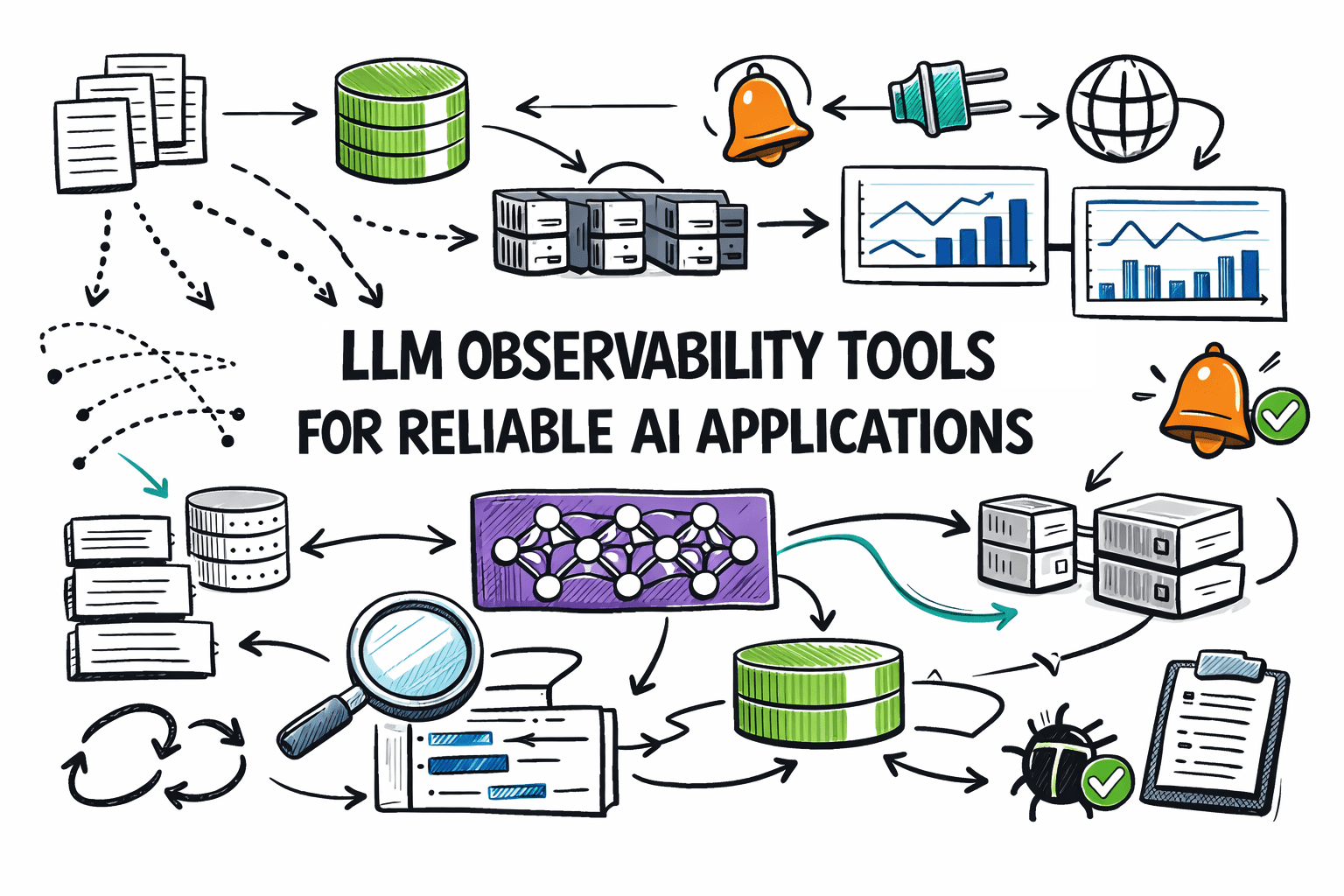

A production AI agent nearly derailed an entire enterprise deployment when its compliance officer posed a deceptively simple question: how do you actually know whether this system is hallucinating? The answer revealed a structural gap in how organizations approach AI deployment. Rather than building evaluation infrastructure alongside development, teams defer it to post-launch phases, discovering too late that measuring hallucination rate, context faithfulness, and tool-selection accuracy in the wild bears no resemblance to validating performance on benchmark datasets. This Towards Data Science piece documents a systematic response to that problem—a 12-metric framework that evolved from over 100 enterprise AI agent deployments, designed to instrument every layer of an AI system and catch failures before trust erodes.
The pattern described here reflects a broader industry rhythm. For the past eighteen months, enterprise adoption of AI agents has accelerated, but the supporting infrastructure—particularly evaluation systems capable of operating at production scale—has lagged. Teams rushed to ship agents powered by large language models, armed with unit tests and integration tests that passed, but lacked mechanisms to detect when a system confidently generated false information or made poor tool selections in response to queries the benchmark never anticipated. The article identifies three dangerous shortcuts: deferring evaluation until after an MVP launches, assuming accuracy on held-out test sets predicts production behavior, and relying on manual spot-checks that mathematically collapse under real-world query volumes. Each represents a bet that breaks catastrophically at scale.
The materialization of this gap matters because it signals where AI deployment actually fails in enterprise contexts. The technical capability to build and fine-tune agents is now broadly accessible; the bottleneck has shifted to production safety and observability. An agent that hallucinates patient symptoms or generates confidently-wrong financial advice doesn't need a better model or fancier prompting—it needs systematic measurement of deviation from ground truth. This reframing moves evaluation from a testing concern into a reliability concern, which organizations take seriously when compliance, liability, and customer trust are at stake. The emergence of mature evaluation frameworks from practitioners, rather than from research labs or tool vendors, suggests the industry is beginning to treat evaluation as a mandatory first-class citizen rather than a post-hoc feature.
The practitioners who built and continue to maintain these systems—teams running multiple enterprise AI projects simultaneously—occupy a privileged position to identify what evaluation actually requires. Development teams that have shipped AI agents into healthcare, financial services, or legal domains cannot afford to learn by failure; they need measurement before deployment. Compliance officers, product leaders, and the engineers who carry on-call responsibilities become stakeholders in evaluation design. This redistributes power away from model researchers and toward the people who run production systems, shaping which metrics get instrumention, which thresholds trigger alerts, and what "safe enough" means in practice.
The competitive implication cuts across the AI infrastructure stack. Organizations that adopt rigorous pre-deployment evaluation frameworks gain both speed and trust—speed because they catch problems early, trust because they can validate claims about system behavior in conditions that actually matter. This advantage cascades: customers trust systems with auditable evaluation practices; regulators favor organizations that can demonstrate systematic measurement; and teams can iterate faster because failures surface immediately rather than weeks later when damage compounds. The vendors and platforms that make evaluation infrastructure straightforward to implement and maintain will accumulate customers. Conversely, organizations that treat evaluation as optional will face increasingly expensive retrofit projects once production incidents force the issue.
The open question now is adoption velocity. The framework exists; the playbook is documented; the rationale is airtight. What remains to be seen is whether evaluation-first practices become the norm or remain a best practice practiced only by teams that have already paid in blood. If regulatory pressure (particularly around hallucination disclosure and liability) accelerates adoption, evaluation frameworks could become table stakes for enterprise AI within the next two years. The alternative—continued deployment of inadequately instrumented systems—becomes harder to defend once the production cost is quantified. This article reads as a turning point, less about the framework itself and more about the moment the industry stops treating evaluation as optional.
This article was originally published on Towards Data Science. Read the full piece at the source.
Read full article on Towards Data Science →DeepTrendLab curates AI news from 50+ sources. All original content and rights belong to Towards Data Science. DeepTrendLab's analysis is independently written and does not represent the views of the original publisher.