
🤗 AI Labs
Hugging Face Blog
Latest open source AI news — Llama, Mistral, Falcon, Phi, and the open-source model ecosystem. Research, releases, fine-tuning, and the open vs. closed AI debate.
Open source AI refers to AI models whose weights, architecture, and (increasingly) training data are publicly released, allowing anyone to download, run, fine-tune, and modify them. The open source AI ecosystem has become a significant counterweight to the closed frontier labs, with models like Meta's Llama series, Mistral, and the Hugging Face community producing capable alternatives that close the gap with proprietary models.
Meta's decision to open-source the Llama model family was a watershed moment. Llama 2 (2023) and Llama 3 (2024) enabled a global ecosystem of fine-tuned variants, deployment tooling, and research. Mistral AI has built a business around open models, releasing Mixtral (a mixture-of-experts model) and Mistral 7B. Microsoft's Phi series demonstrated that small, well-trained models can punch above their weight class. Hugging Face serves as the central hub for open model discovery, hosting over 500,000 models.
The open vs. closed AI debate is one of the defining tensions in the field. Open-source advocates argue that transparency, auditability, and local deployment are essential for safety, privacy, and democratization. Critics argue that releasing powerful models without safeguards accelerates proliferation of harmful capabilities. DeepTrendLab tracks open model releases, fine-tuning techniques, deployment tooling, and the ongoing policy debate around open-source AI regulation.

I spent a weekend trying to convince a language model it was C-3PO. Here's what actually worked. The post What’s the Best Way to Brainwash an LLM? appeared…

Adaption's new AutoScientist tool is designed to let models adapt to specific capabilities quickly through an automated approach to conventional fine-tuning.
In this post, we show you how to set up FLOPs tracking during LLM fine-tuning using the open source Fine-Tuning FLOPs Meter toolkit on Amazon SageMaker AI. You…

Oracle has announced the general availability of MySQL 9.7.0, marking the start of a new 9.7 LTS release series and the first major one since MySQL 8.4. The…

From tokenisation to evaluation : how modern language models actually work in practice The post The Must-Know Topics for an LLM Engineer appeared first on Towards Data Science…
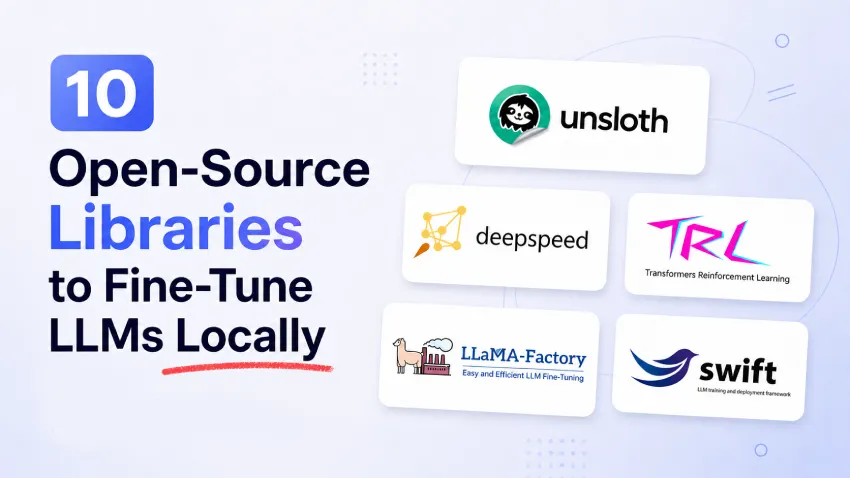
Fine-tuning LLMs has become much easier because of open-source tools. You no longer need to build the full training stack from scratch. Whether you want low-VRAM training, LoRA,…
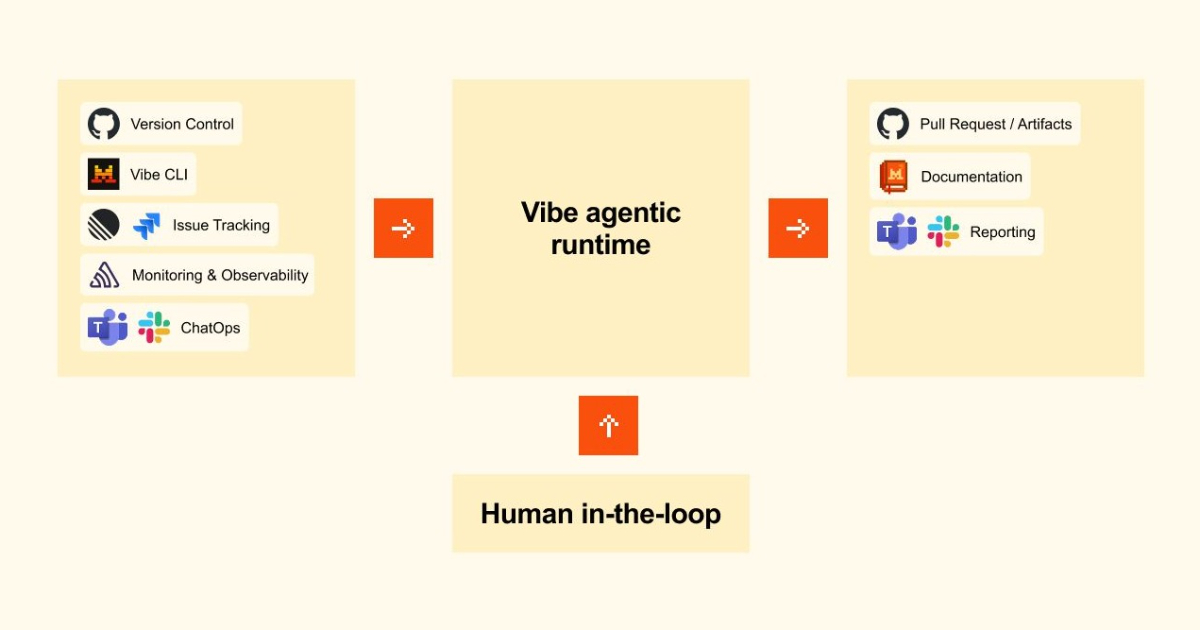
Mistral has released Mistral Medium 3.5, a 128-billion parameter model designed to handle instruction following, reasoning, and coding within a single system, and introduced new cloud-based agent capabilities…
Amazon SageMaker AI now offers an agentic experience that changes this. Developers describe their use case using natural language, and the AI coding agent streamlines the entire journey,…

Last Updated on May 4, 2026 by Editorial Team Author(s): Ala Falaki, PhD Originally published on Towards AI. Month in 4 Papers (April 2026) This series of posts…
In this post, we take a deeper look at how RLAIF or RL with LLM-as-a-judge works with Amazon Nova models effectively.

Mistral's approach prioritizes natural language interactions, making coding more accessible while allowing for integration with existing code repositories.

OpenAI Privacy Filter is an open-weight model for detecting and redacting personally identifiable information (PII) in text with state-of-the-art accuracy
Run a powerful, private AI coder locally with OpenCode, Ollama & Qwen3-Coder. Free, offline, and unlimited.


Llama is Meta's family of open-source large language models, released in 2023–2024. By releasing model weights publicly, Meta enabled anyone to run, fine-tune, and deploy capable LLMs without relying on closed API providers. Llama 3 (released 2024) with 70B and 405B parameter variants competes with GPT-4 class models, and has spawned thousands of fine-tuned variants for specific use cases.
Open-weight models release the trained model weights publicly, allowing anyone to run and fine-tune them, but may not release training data or full training code. True open-source AI releases everything: weights, training data, training code, and evaluation infrastructure. Most 'open' AI models are open-weight, not fully open-source. The OSI (Open Source Initiative) has published criteria for what qualifies as genuinely open-source AI.
Fine-tuning adapts a pre-trained open-weight model to a specific task or domain using a smaller labeled dataset. Parameter-efficient fine-tuning techniques like LoRA (Low-Rank Adaptation) allow fine-tuning even large models on consumer hardware. This has enabled a cottage industry of specialized models: instruction-tuned assistants, coding models, medical models, and role-playing models, all built on open foundations like Llama.