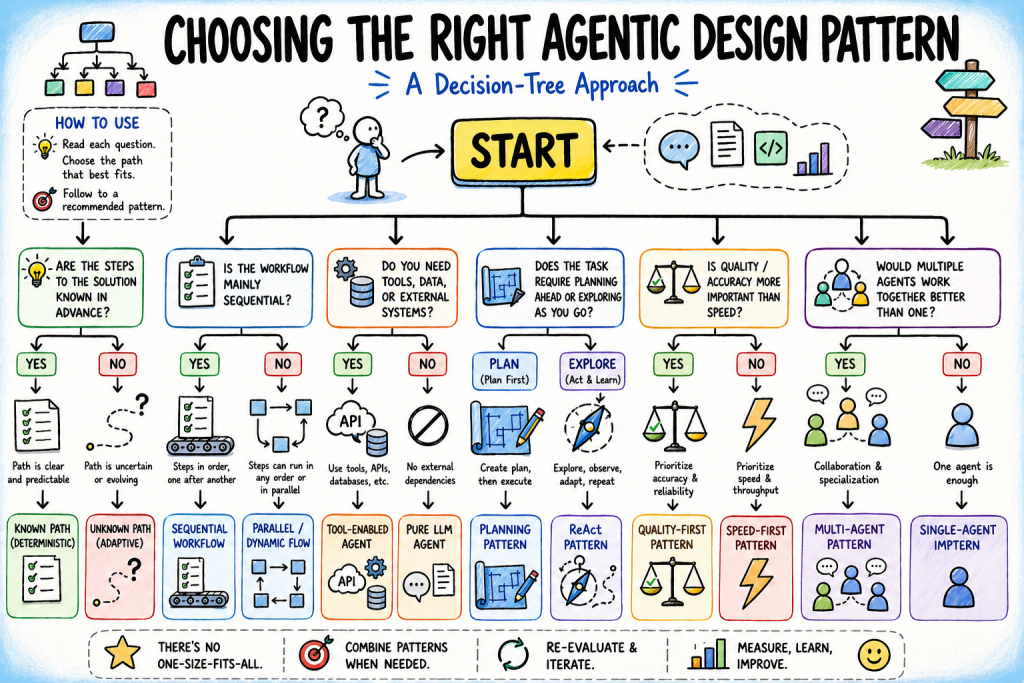
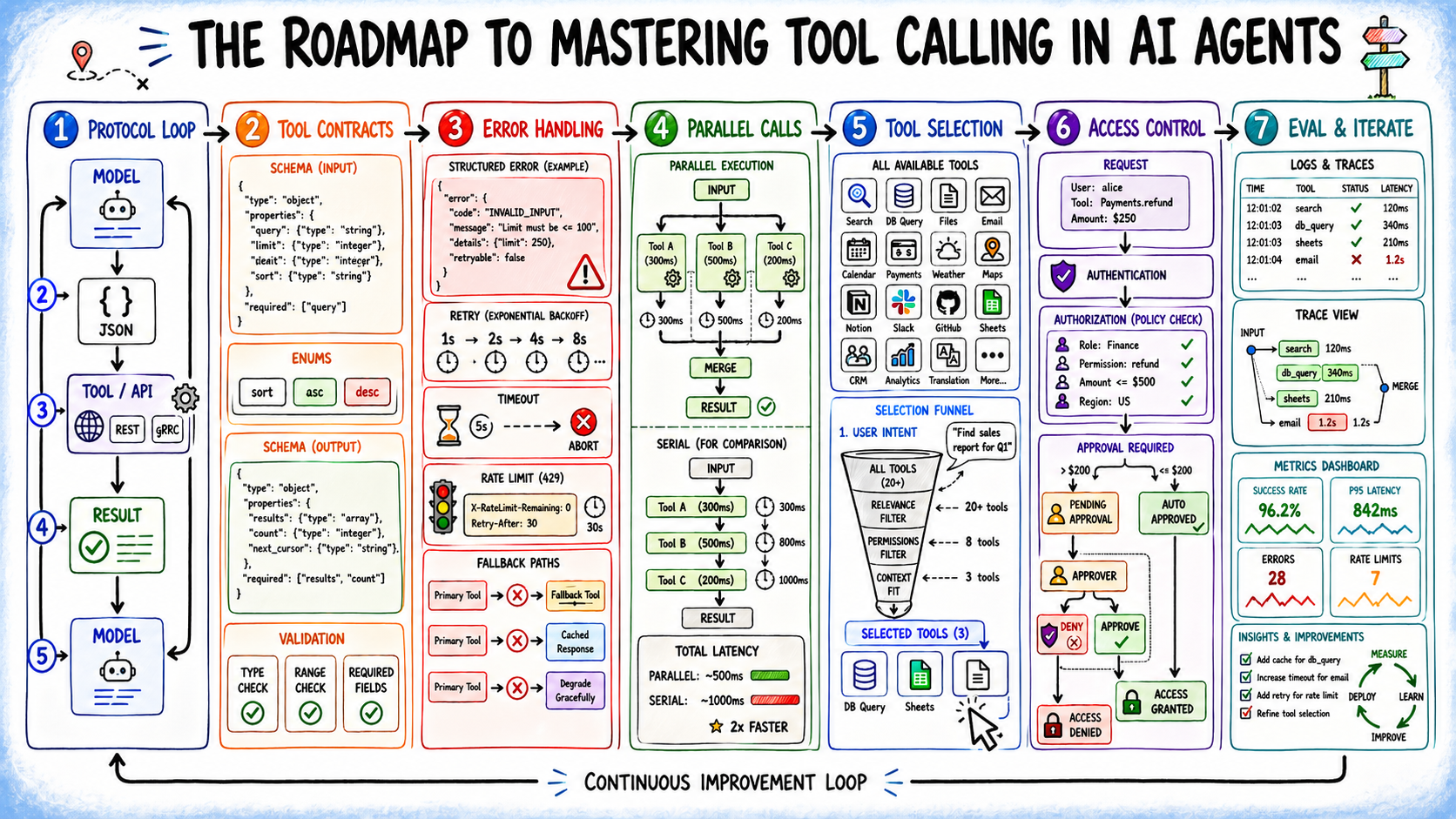
AI agents are systems that use large language models as a reasoning engine to plan and execute multi-step tasks autonomously, interacting with tools, APIs, codebases, and the external world. Unlike chat interfaces where a human drives each turn, agents operate with a degree of autonomy — receiving a goal and working through the steps required to achieve it, including error recovery and plan revision.
The agent paradigm gained serious traction in 2023–2024 as frontier LLMs became capable enough to reliably use tools and follow complex instructions across many steps. Key components of an agent system include the LLM backbone, tool use (web search, code execution, file I/O, API calls), memory (short-term context, long-term vector stores), and orchestration frameworks like LangChain, AutoGen, CrewAI, and Anthropic's Model Context Protocol (MCP). Agent benchmarks like SWE-bench (software engineering) and WebArena (web navigation) measure autonomous task completion.
Enterprise adoption of agents is accelerating across software development (coding agents), customer support (support automation), data analysis, and workflow automation. DeepTrendLab tracks agent frameworks, benchmark results, enterprise deployments, and the emerging safety challenges of autonomous systems — including prompt injection attacks, uncontrolled tool use, and alignment under agentic conditions.
Frequently Asked Questions about AI Agents
What is an AI agent?
An AI agent is an AI system that can autonomously plan and execute multi-step tasks by combining an LLM with tools (web search, code execution, file access, API calls) and memory. Unlike a chatbot that responds to single queries, an agent can receive a high-level goal and work through the steps to achieve it, making decisions along the way.
What is the difference between an AI agent and a chatbot?
A chatbot responds to individual queries in a conversation, with a human directing each step. An AI agent is given a goal and autonomously plans the steps to achieve it — searching the web, writing and running code, reading files, calling APIs — without requiring human input at each step. Agents can run for minutes or hours to complete complex tasks.
What are the main AI agent frameworks?
Leading agent frameworks include LangChain and LangGraph (Python, broad ecosystem), AutoGen (Microsoft, multi-agent coordination), CrewAI (role-based agent teams), and Semantic Kernel (Microsoft, enterprise .NET/Python). Anthropic's Model Context Protocol (MCP) standardizes how agents connect to tools and data sources. OpenAI's Assistants API provides a hosted agent infrastructure.