AWS Machine Learning Blog

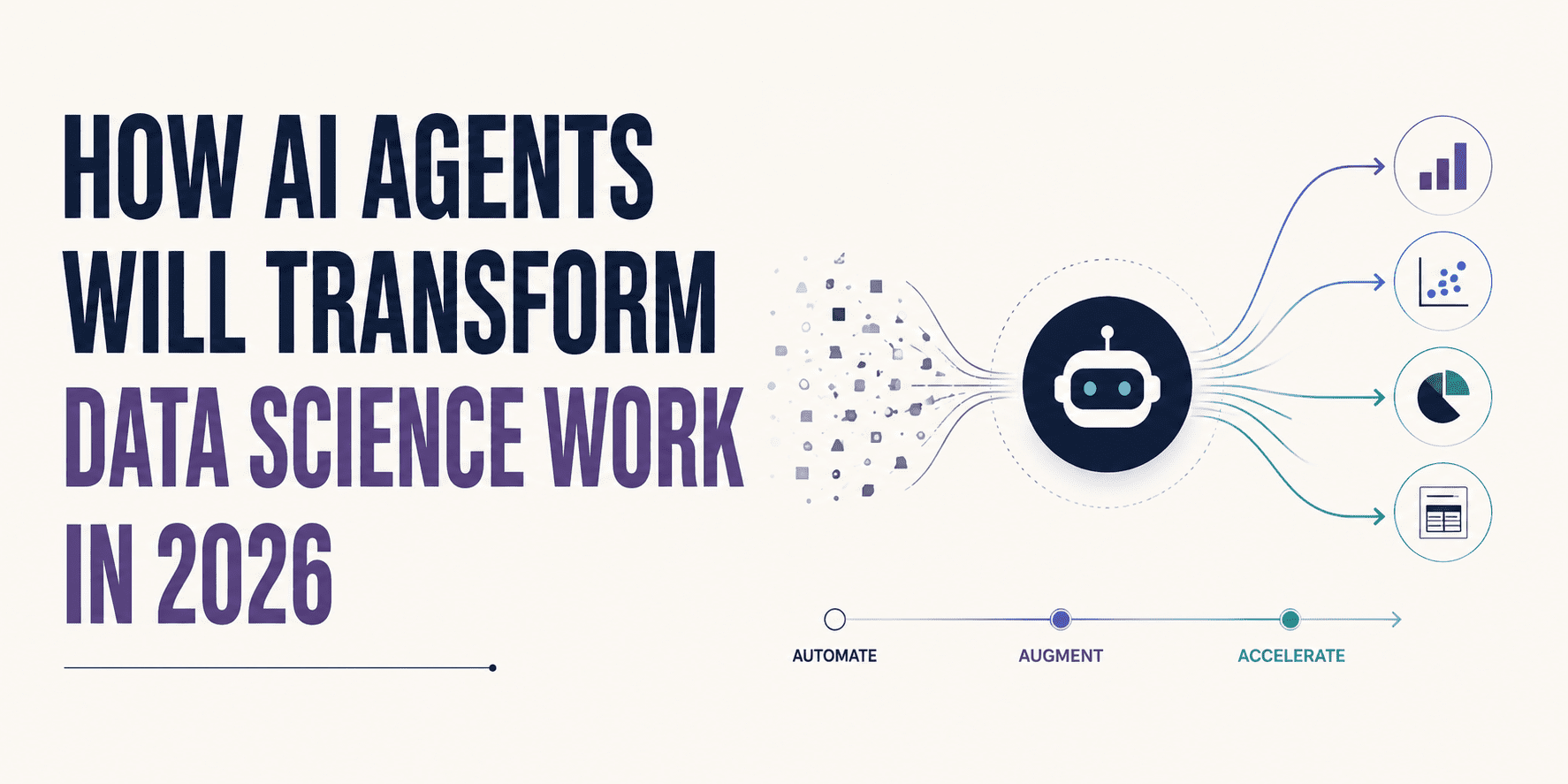
The role of the data scientist has undergone a fundamental transformation. Where practitioners once spent their careers tuning hyperparameters and building custom feature engineering pipelines, the focus has shifted toward orchestrating pre-built AI components—vector databases, embedding services, prompt templates, and agentic workflows. This reflects the maturation of foundation models as commodity services. The recognition that modern AI projects spend 80-90% of engineering effort on data integration and system coordination rather than model optimization marks a watershed moment. The data scientist's actual work has been redefined not by what they build, but by how they assemble existing pieces into functioning systems.
The conditions for this shift were inevitable. For years, the bottleneck was model quality—achieving incremental improvements required deep statistical expertise and meticulous optimization. Training state-of-the-art models in-house was a competitive advantage. That era has ended. The emergence of accessible, general-purpose foundation models has commoditized what was once the hardest technical problem in machine learning. When teams can access better capabilities through an API than they could build themselves in months, custom model development loses its value proposition. This mirrors past inflection points—once hard infrastructure becomes easy utility, engineering focus migrates upstream. The AI industry has crossed that threshold.
The significance extends beyond changing job descriptions. By commoditizing model capability, this democratizes advanced AI to teams lacking massive ML infrastructure. But it simultaneously increases complexity—the problems shift from "train a better model" to "architect a reliable system." Organizations now compete not on algorithm sophistication but on integration quality, prompt engineering, and orchestration efficiency. This creates opportunities for smaller players to compete with established tech giants, but raises the bar for systems thinking. The competitive advantage moves from "which model performs better" to "which system design minimizes latency, cost, and operational risk while coordinating multiple moving parts."
This reshapes opportunities and risks across constituencies. Data scientists must evolve toward software engineering rigor and operational practices borrowed from backend teams. Enterprises gain access to powerful AI without building research teams, lowering adoption barriers but raising integration demands. Startups gain parity with tech giants in model access, though they need stronger architectural judgment. Research scientists focused purely on model innovation face contracting opportunities in industry. The talent pipeline shifts—universities and bootcamps must reorient curricula from model-tuning expertise toward systems thinking. The profession is bifurcating: research roles in academia and specialized domains remain, while industry increasingly demands hybrid engineer-architects.
The landscape reorganizes around different layers. Cloud providers and API-first companies win by transforming ML from research into infrastructure—their scale and reliability become moats. Vector databases, prompt management tools, and orchestration frameworks become critical. Open-source orchestration projects gain leverage. Meanwhile, companies built on proprietary ML capabilities face margin compression. The real competitive advantage accrues to whoever masters the orchestration layer—efficiently composing, routing, and managing API calls across services. This favors platform-thinking companies over model-builders. The economics reward those solving integration problems at scale, not those optimizing individual algorithms.
Several tensions shape what comes next. Will standardized patterns emerge for AI system design, or will heterogeneity persist? How will costs scale as complexity grows, and will pricing models evolve beyond inference-centric structures? Universities must adapt faster to produce architects, not model-tuners. The concentration of capability among a few API providers creates dependency risk—watch whether open-source models offer genuine alternatives or whether the moat persists. The next AI wave depends less on algorithmic breakthroughs than on whoever builds reliable orchestration layers at scale. Success increasingly belongs to those comfortable with the unglamorous work of systems integration, not the exciting frontier of model research.
This article was originally published on Towards Data Science. Read the full piece at the source.
Read full article on Towards Data Science →DeepTrendLab curates AI news from 50+ sources. All original content and rights belong to Towards Data Science. DeepTrendLab's analysis is independently written and does not represent the views of the original publisher.